Author: Smith Page

  • Why Your AI Stack Is Broken | LLM-Agnostic Platform

    `

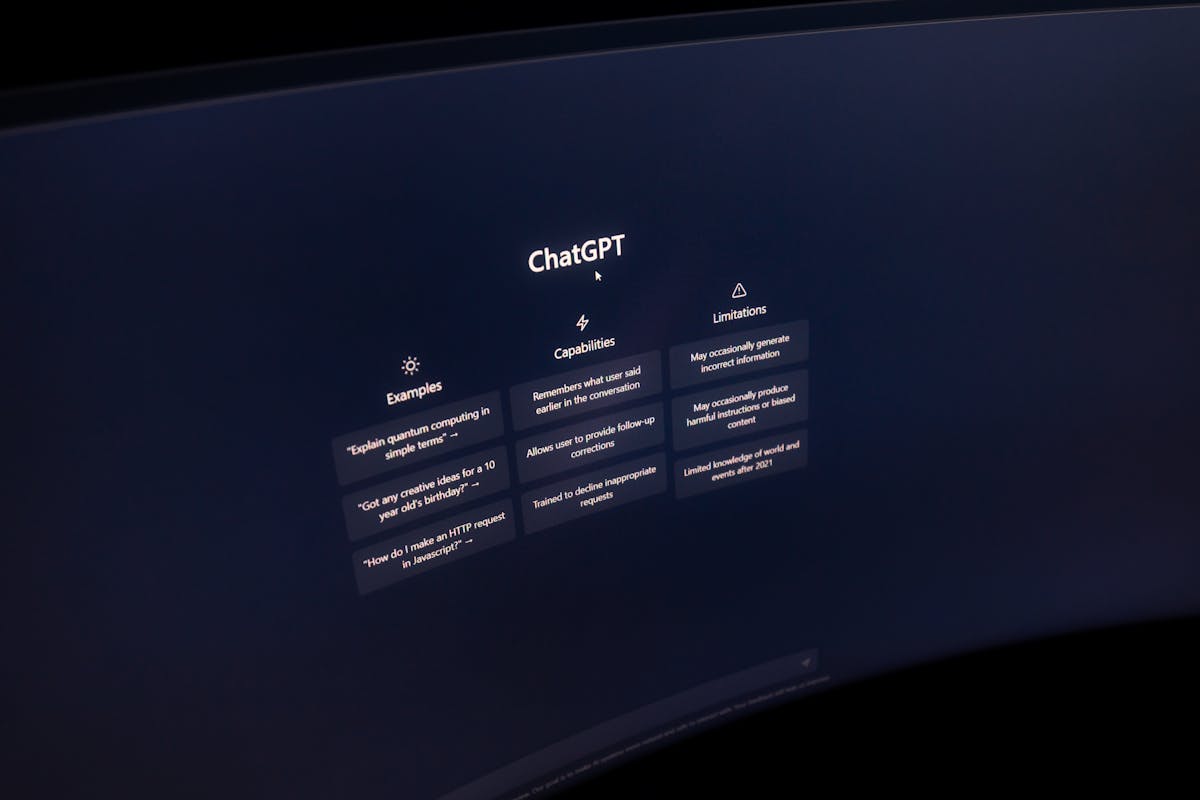
    Close-up of a computer screen displaying ChatGPT interface in a dark setting.
    Photo via Pexels

    `

    Here’s a question most enterprise IT leaders aren’t asking out loud: what if the AI tools you added to increase productivity are actually making it worse? That’s the hidden cost of a fragmented stack — and why an llm agnostic platform is quickly becoming the smarter architecture choice for enterprise IT.

    Not because the tools are bad.

    Because you have too many of them, none of them share context, and your people are spending more time toggling between platforms than doing the work those platforms were supposed to accelerate.

    The average enterprise knowledge worker switches between AI tools roughly 1,200 times a day. That’s not a workflow. That’s a treadmill. And it’s costing your organization north of four hours per person, per week — before you even factor in the cognitive recovery cost of each context switch.

    The fix isn’t a better AI tool. It’s a different kind of infrastructure: an LLM-agnostic platform that puts a unified, governed access layer between your people and the proliferating model ecosystem underneath them.

    That’s what this post is about — and why platforms like GPT Studio are increasingly relevant to CIOs trying to reduce AI sprawl without slowing innovation.

  • Get More from Your Team Without Burnout | Workilo

    Developer productivity burnout is not just an engineering problem anymore. For small marketing agencies and lean content teams, it shows up as missed deadlines, vague briefs, endless reviews, and a workday dominated by switching between tools instead of producing meaningful work.

    When agency owners and content leads spend most of the day on “work about work”—status updates, copy-pasting between platforms, chasing approvals, rewriting AI output, and re-explaining context—performance suffers. So does morale. And when pressure builds, even creative problems like writer’s block become operational problems.

    The good news is this: you do not need to squeeze harder to get more output. You need to reduce friction, preserve context, and build workflows that let skilled people stay in skilled work.

    The hidden reason smart teams still burn out

    Burnout often gets blamed on workload alone. But for agencies and content teams, the deeper problem is usually fragmentation.

    Your team may be using:

    • one tool for planning
    • another for research
    • another for AI drafting
    • another for design
    • another for approvals
    • another for publishing
    • and a few more for reporting and communication
    • On paper, that looks like a modern stack. In practice, it creates:

    • constant context switching
    • duplicated effort
    • unclear ownership
    • inconsistent outputs
    • slower turnaround times
    • more mental fatigue
    • This is how developer productivity burnout expands beyond developers and starts affecting strategists, writers, editors, designers, and account leads. Everyone becomes a coordinator instead of a creator.

      What “work about work” actually looks like in a 3–20 person team

      Small teams rarely say, “We have too many handoffs.” They say things like:

    • “Why are we still waiting on this brief?”
    • “Did anyone already research this?”
    • “Can you send me the latest version?”
    • “Which prompt did we use last time?”
    • “Why does this draft sound generic again?”
    • “Who owns final approval here?”
    • That is work about work.

      It shows up as invisible overhead:

    • rewriting instead of creating
    • chasing instead of deciding
    • searching instead of shipping
    • toggling instead of thinking
    • For many teams, this overhead quietly consumes the majority of the day.

      Why more pressure does not solve developer productivity burnout

      When output slows down, many leaders instinctively do one of three things:

    • Add more meetings
    • Add another tool
    • Push for faster turnaround
    • Unfortunately, each one can make the problem worse.

      More meetings reduce focus

      Meetings often feel productive because they create motion. But they also interrupt deep work and force people to reload context multiple times a day.

      More tools increase switching costs

      Every additional app introduces another place to check, update, search, and remember.

      More pressure increases shallow work

      When people feel rushed, they default to short-term completion over long-term quality. That leads to:

    • weaker briefs
    • lower-quality first drafts
    • more revisions
    • more team frustration
    • more burnout
    • According to research and industry reporting, burnout in software and knowledge work is strongly tied to high workload, inefficient processes, and poor workflow design, not just effort alone. For example, both InfoWorld and Computer Weekly point to process friction and unrealistic expectations as major contributors.

      The real cost of context switching

      Every time someone jumps from one tool, task, or channel to another, they lose more than time. They lose momentum.

      That cost compounds across a team:

    • a strategist loses thread on campaign positioning
    • a writer loses voice and structure
    • a designer loses creative continuity
    • a lead loses confidence in timelines
    • an owner loses visibility into what is actually blocking progress
    • This is where developer productivity burnout becomes a business issue.

      The symptoms are familiar:

    • people look busy but output feels slow
    • everyone is working, but no one feels caught up
    • AI is in the stack, but work still feels manual
    • drafts get produced quickly, but approvals still drag
    • teams are active all day, yet strategic work keeps slipping
    • Writer’s block is often a workflow problem, not a creativity problem

      Teams often treat writer’s block like a personal issue. But in agency and content environments, it is often a systems issue.

      A writer does not freeze because they suddenly forgot how to think. They freeze because:

    • the brief is unclear
    • the audience definition is vague
    • research is scattered
    • brand voice is trapped across old documents
    • examples live in multiple places
    • the AI draft is generic and unusable
    • approvals are likely to change the direction anyway
    • That is not a creativity gap. That is a context gap.

      When people have:

    • clear goals
    • centralized inputs
    • reusable workflows
    • accessible brand context
    • structured handoffs
    • …writer’s block becomes easier to break through.

      What high-performing teams do differently

      Teams that get more output without burning people out tend to share a few traits.

      1. They reduce tool fragmentation

      They do not chase every shiny new AI app. They simplify the path from idea to execution.

      2. They preserve context

      They stop forcing team members to restate the same information across tools and handoffs.

      3. They standardize repeatable work

      They turn common tasks into reusable workflows:

    • SEO research
    • content briefing
    • competitor analysis
    • repurposing
    • publishing preparation
    • reporting summaries
    • 4. They protect deep work

      They reduce unnecessary interruptions and make it easier for team members to stay in one mode long enough to produce quality work.

      5. They measure useful outcomes

      Instead of rewarding visible busyness, they look at:

    • cycle time
    • revision volume
    • publish consistency
    • time to first usable draft
    • time spent in review loops
    • percentage of day spent in skilled output
    • A better model: fewer tools, clearer workflows, stronger output

      If your team is overloaded, your best move is usually not hiring first and not automating everything at once.

      It is redesigning the workflow.

      A simple high-performing content workflow often looks like this:

    • Brief is created once
    • Research is gathered in one place
    • AI helps generate structure, not chaos
    • Drafting happens with shared context
    • Review happens with clear ownership
    • Publishing and repurposing are connected
    • Outputs move forward without manual re-entry
    • This is the difference between using AI as a novelty and using AI as an operating layer.

      That is also where platforms like Workilo become strategically useful. Instead of treating research, drafting, SEO, and asset production as disconnected tasks, Workilo is built around collaborative agent workflows that help teams move from input to deliverable with less copy-paste, less rework, and fewer context resets.

      If you want to understand how that structure works in practice, Workilo’s documentation covers agents, workflows, integrations, and setup in more detail.

      Practical example: the overloaded agency content lead

      Imagine a content lead at a 10-person agency managing four client accounts.

      Their day starts with:

    • checking Slack for client requests
    • opening Notion for content planning
    • moving into Google Docs for briefs
    • using ChatGPT for ideation
    • switching to another AI tool for rewriting
    • opening SEO software for keywords
    • hunting through shared folders for past examples
    • moving back into Slack for approvals
    • manually copying assets into publishing systems
    • By lunch, they have “worked” for hours but produced very little durable value.

      Now compare that with a more integrated workflow:

    • campaign context is stored once
    • research and brand guidance are attached to the workflow
    • AI agents support research, outlining, drafting, and asset generation collaboratively
    • outputs move into the right format without manual repackaging
    • the team reviews from a shared source of truth
    • The result is not just speed. It is less mental load.

      Practical example: when developer productivity burnout hits marketing teams

      A writer receives a topic.
      The strategist has keyword notes in one system.
      The account lead has client positioning in another.
      The previous campaign lives in another folder.
      A subject matter expert shared feedback in a Slack thread.
      The first AI draft sounds generic.
      Then everyone wonders why progress stalls.

      That is how developer productivity burnout translates into knowledge-work burnout:

    • too many systems
    • too much manual coordination
    • too little shared context
    • The more specialized the team, the more damaging this becomes.

      How to spot burnout risk before performance drops further

      You do not need to wait for people to say they are burned out.

      Look for these signals:

    • high revision volume on routine tasks
    • repeated questions about process or ownership
    • frequent “latest version?” requests
    • delays between draft and approval
    • AI outputs that require heavy cleanup every time
    • rising meeting volume with no increase in delivery
    • talented people spending more time coordinating than creating
    • visible exhaustion around simple recurring tasks
    • Burnout often starts as workflow drag before it becomes emotional disengagement.

      Five ways to get more from your team without burning them out

      1. Audit your actual workflow

      Map the real path from request to finished asset.

      List:

    • every tool involved
    • every handoff
    • every approval step
    • every place context gets lost
    • Most teams discover they are switching more than they realized.

      2. Consolidate where the work actually happens

      Do not just consolidate subscriptions. Consolidate the moments where work moves:

    • brief to draft
    • research to strategy
    • draft to review
    • review to publish
    • If you are evaluating options, start with a platform that supports end-to-end marketing workflows instead of adding yet another point solution. Workilo’s core platform page is a useful reference point for that kind of model: Workilo home.

      3. Turn recurring work into repeatable workflows

      If your team does it every week, it should not be reinvented every week.

      Examples:

    • SEO blog production
    • competitor teardown
    • social repurposing
    • presentation building
    • client reporting summaries
    • Workilo’s workflow model is especially relevant here because it is built for proven workflows for content creation, SEO research, competitive analysis, and social campaigns rather than one-off prompting.

      4. Give AI better context, not more responsibility

      AI is most useful when it is grounded in:

    • clear instructions
    • audience definitions
    • approved brand voice
    • relevant examples
    • shared source material
    • Bad context produces more cleanup.
      Good context reduces rework.

      5. Protect creative and strategic time

      Block time for:

    • writing
    • campaign planning
    • analysis
    • editing
    • problem solving
    • Not everything should be instantly interruptible. Burnout grows when every task becomes reactive.

      Where internal systems make the biggest difference

      For small teams, the biggest gains usually come from fixing these three areas:

      Research

      Stop scattering inputs across tabs, documents, and chats.

      Drafting

      Give writers and strategists a shared operating context so they are not starting from scratch each time.

      Delivery

      Make it easier to move finished work into slides, CMS platforms, or campaign assets without manual transformation.

      Workilo positions itself around exactly this handoff problem. According to its platform messaging, teams can create:

    • blog posts
    • social campaigns
    • email sequences
    • presentation decks
    • SEO content
    • competitive analysis
    • market research
    • case studies
    • …through specialized AI agents working together in one workflow environment. You can explore that product positioning here: Workilo digital workers.

      The strategic payoff of fixing burnout

      Reducing burnout is not just a culture win. It is a performance strategy.

      When teams spend less time on overhead, they gain:

    • better output quality
    • faster cycle times
    • stronger consistency
    • fewer revision rounds
    • higher confidence in delivery
    • more room for actual strategy
    • better retention of high-value talent

    That matters even more in small agencies, where one overloaded content lead or strategist can become the bottleneck for the entire client pipeline.

    Final thought: get more by removing friction, not adding pressure

    If your team is stuck in a cycle of developer productivity burnout, missed momentum, and recurring writer’s block, the answer is not squeezing harder. It is designing work that flows better.

    The teams that win are not the ones using the most tools. They are the ones with the clearest workflows, the fewest unnecessary handoffs, and the strongest shared context.

    If your agency or content team is spending too much time on “work about work,” now is the right time to rethink how work moves from idea to output.

    And if you want a practical example of how collaborative AI workflows can reduce fragmentation, preserve context, and help teams ship more without more burnout, take a closer look at Workilo and its workflow documentation.

    The goal is simple: more skilled output, less coordination overhead, and less developer productivity burnout across the people doing the real work.

  • AI Workflow Automation for SMB Teams | Workilo

    How AI Workflow Automation Helps Small Business Teams Work Faster Without Burning Out

    Blog image 1
    Photo via Pexels

    By Workilo | AI Workflow Automation for Growing Teams

    It’s 9:15 a.m. Your marketing manager has already opened six browser tabs.

    ChatGPT for the campaign brief. A project tool for task assignment. The CRM for client context. Slack for approval chasing. Google Docs for the actual draft. And a spreadsheet somewhere that holds the only version of the content calendar that anyone trusts.

    By 9:30, she’s explained the same campaign objective three times — to three different tools that have no idea the others exist.

    That’s not a productivity problem. That’s an infrastructure problem.

    And it’s costing your team more than you think. According to research published by Harvard Business Review, the average knowledge worker toggles between applications over 1,200 times per day — burning nearly four hours of productive time every single week. Researchers have a name for it: the toggle tax.

    And here’s what makes it worse: as AI tools multiply, the toggle tax is accelerating, not shrinking. Every new AI assistant you add to the stack is another context switch waiting to happen.

    AI workflow automation fixes this at the infrastructure level. Not with another tool. With a fundamentally different approach to how work gets done.

    This guide breaks down what AI workflow automation actually means for small business teams, where it delivers the most immediate ROI, and how to start without overcomplicating it.

    If your team is already feeling the weight of fragmented tools, it’s worth seeing how Workilo’s AI workflow platform approaches connected execution differently.

  • Get More From Your Team With AI Workflow Automation

    How to Get the Most Out of Your Team With AI Workflow Automation — Without Burning Them Out

    The burnout isn’t coming from the hard work.

    It’s coming from the wrong work.

    Your developers are good at what they do. Your designers are talented. Your account managers know the clients inside and out. And your best freelancers? They’re running lean, sharp, and fast. Nobody on your team is underperforming.

    But somewhere between the talent you hired and the output you need, something gets swallowed:

    • Status updates
    • Report formatting
    • Manual handoffs
    • Intake forms
    • Asset repurposing across five formats
    • Repetitive admin that quietly eats the day

    This is where AI workflow automation matters.

    Not as a gimmick. Not as a chatbot bolted onto an old process. And not as a way to replace your team. The real value is simpler than that: it removes the work that was never the best use of your people in the first place.

    For SMB agency owners, mid-market teams, and bigger freelancers, that distinction matters. Growth pressure is real. Margins are tight. Hiring is expensive. And the actual constraint usually isn’t talent — it’s workflow design.

    If your team is spending too much time on coordination, admin, and repeatable execution, then the problem isn’t effort. It’s infrastructure.

  • Why Your AI Stack Is Broken — And How to Fix It

    By Clive Moore | May 5, 2026

    It’s 8:47 AM. You’ve got a blog post due by noon.

    You open ChatGPT in one tab to brainstorm angles. Perplexity in another to fact-check a stat. You copy the best paragraphs into Jasper because that’s where the “real writing” happens. Then you paste the draft into Grammarly. Then you pull key phrases into Surfer for SEO scoring. Then you drop the headline options into Canva’s AI assistant to mock up a social graphic.

    Six tools. Six tabs. Six separate conversations with AI that have absolutely no idea what the other five just said.

    Sound familiar? You’re not alone. The average knowledge worker now juggles four to six AI productivity tools every single day. And here’s the uncomfortable part: each one of those tools is genuinely good at what it does. Individually, they’re impressive. Together, they create a workflow held together with copy-paste and prayer.

    The problem isn’t the AI. It’s the stack.

    And the fix isn’t a better tool. It’s a different architecture — one built around AI workflow automation, where specialized AI collaborators, what we call workalongs, actually work together across your entire workflow without you playing middleman.

    Let me show you what I mean.

    The Real Cost of a Disconnected AI Stack

    Most people don’t realize how much the fragmented tool problem is actually costing them. Not in some abstract, hand-wavy productivity sense. In real time, real money, and real cognitive energy — every single day.

    The Copy-Paste Tax

    Every time you move output from one AI tool into another, you pay a tax. You lose:

    • Context — the strategic reasoning that shaped the original output
    • Formatting — structure that has to be rebuilt from scratch in the next tool
    • Nuance — the subtle adjustments that made the previous output actually work
    • Here’s a scenario that plays out in marketing teams everywhere: A marketing manager uses ChatGPT to brainstorm campaign angles. She picks the three strongest and copies them into Jasper for long-form draft development. Jasper doesn’t know why those angles were chosen. It doesn’t know the target audience she described in her original prompt. It doesn’t know the brand voice guidelines she uploaded into ChatGPT last week.

      So she re-explains. Again.

      Then the draft goes into Grammarly for editing. Then key phrases get pulled into Canva’s AI for visual copy adaptation. Four tools. Zero shared memory. And somewhere between thirty and forty-five minutes burned per project — not on the work itself, but on the handoffs between the work.

      Multiply that across every project, every week, every team member. The copy-paste tax is one of the most expensive invisible costs in modern knowledge work.

      Context Collapse

      Here’s what makes it worse: AI tools in isolation don’t know what happened before them or what comes after. Each one starts from zero. You type a prompt, you get a response, and the entire burden of continuity falls on you.

      You become the integration layer. The human middleware.

      Think about how good work actually flows. It builds. One insight leads to the next. A research finding shapes a strategic angle, which shapes a headline, which shapes the body copy, which shapes the social distribution plan. Each step is informed by everything that came before it.

      Disconnected AI tools don’t build. They reset. And every reset means you’re spending energy re-establishing context instead of moving the work forward.

      The Hidden Expense Nobody Tracks

      Then there’s the money. Four to six AI subscriptions at $20–$50 per month each adds up to $100–$300 per month per person. For a team of five, that’s potentially $18,000 a year in AI tools alone — before you’ve accounted for the time lost stitching them together.

      Your CFO sees one budget line: “AI tools.” In reality, it’s a fragmented mess with:

    • Overlapping capabilities no one is tracking
    • Redundant features you’re paying for twice
    • Zero coordination between any of them
    • But the cost that really stings isn’t the subscriptions. It’s the cognitive load — the daily decision fatigue of figuring out which tool to use for which task, which prompt works best where, and how to stitch the outputs into something coherent.

      You didn’t sign up for AI tools so you could spend your day managing AI tools.

      Why “All-in-One” AI Tools Don’t Actually Solve This

      At this point, most people arrive at the same conclusion: “I just need one tool that does everything.”

      It’s a logical instinct. And it’s wrong.

      The Swiss Army Knife Problem

      All-in-one AI tools try to be generalists. They promise writing, research, editing, image generation, project management, and analytics — all under one roof. Sounds efficient. In practice, they do twelve things at a B-minus level.

      Think about how real professional teams work. You don’t hire one person to handle strategy, writing, editing, design, and project management. You hire specialists:

    • A strategist who thinks differently than a copywriter
    • An editor who catches what the writer can’t see
    • A project manager who tracks what everyone else is too deep in the work to notice
    • Then — and this is the part that matters — those specialists collaborate. They share context. They hand off work with full awareness of what came before and what needs to happen next.

      The “all-in-one” pitch sounds efficient, but it fundamentally misunderstands how quality work gets produced. Generalists working in isolation will always be outperformed by specialists working in coordination.

      What Actually Works — Specialization Plus Coordination

      The answer isn’t one tool. It’s specialized tools that share context and hand off work intelligently.

      This is what multi-agent AI systems make possible. Instead of one model trying to do everything, you have purpose-built AI agents — each exceptional at a specific function — working together through an orchestration layer that maintains context across the entire workflow.

      This is the architecture behind collaborative workalongs. And it changes what’s possible.

      So what does it actually look like when AI tools work together instead of just existing in the same subscription?

      What Collaborative Workalongs Actually Are (And Why the Architecture Matters)

      Let’s get specific. Because “workalong” is a term you’re going to hear more and more, and it’s worth understanding what it actually means — and what makes it fundamentally different from the chatbot interfaces most people are used to.

      A Workalong Is Not a Chatbot

      A workalong is a specialized AI collaborator built for a specific professional function — research, writing, editing, strategy, SEO, project coordination, content distribution. Each one purpose-built. Each one exceptional in its domain.

      But here’s the distinction that matters: a workalong isn’t a prompt-response loop. It’s not a chatbot you feed instructions to and hope for the best. It’s a persistent collaborator with deep capability in its domain and awareness of the broader project context.

      Think of it like a senior colleague who already knows your project, your standards, your audience, and your deadlines — and actually does the work alongside you. Not a junior assistant you have to micromanage. A peer-level specialist who gets better the more you work together.

      These are specialized AI assistants in the truest sense. Not general-purpose tools wearing a specialist costume.

      The Collaboration Layer — How Workalongs Talk to Each Other

      The real breakthrough isn’t any single workalong. It’s the orchestration layer between them.

      When a research workalong completes its analysis, it doesn’t dump output into a text box for you to copy somewhere else. It passes structured findings — with context, citations, and relevance scoring — directly to the writing workalong. The writing workalong drafts with full awareness of the research foundation. The editing workalong refines with knowledge of both the original brief and the strategic intent.

      This is AI workflow automation in the truest sense. Not automating one isolated step. Automating the flow between steps — the handoffs, the context transfers, the continuity that you’ve been managing manually this entire time.

      Under the hood, this is powered by a multi-model architecture. Different AI models — OpenAI, Anthropic, DeepSeek, Cohere — each selected for their specific strengths and coordinated under one AI workflow platform. The right model for the right task, every time. You don’t have to think about which engine is running. You just see better output.

      > What is a multi-agent AI system? It’s an architecture where multiple specialized AI agents — each built for a specific function — share context and coordinate through an orchestration layer to complete complex tasks end-to-end. Unlike single-model tools, multi-agent systems don’t reset between steps. They build.

      Human-in-the-Loop, Not Human-as-the-Loop

      I want to be clear about something: workalongs don’t remove you from the process. You direct. You review. You approve. You make the creative and strategic decisions that AI shouldn’t make.

      What changes is your role:

    • Old role: Human middleware — copying, pasting, reformatting, re-explaining context to every tool
    • New role: Decision-maker — directing, reviewing, shaping the outcome
    • That’s the shift. From human-as-the-loop to human-in-the-loop. And it’s a fundamentally better way to work.

      What This Looks Like in Practice — Three Real Workflows

      Theory is useful. But most people need to see the workflow play out before it clicks. Here are three scenarios pulled directly from the kinds of professionals using Workilo today.

      The Content Creator — From Brief to Published Post

      The old way:
      Research in Perplexity → outline in ChatGPT → draft in Jasper → edit in Grammarly → SEO check in Surfer → format in CMS. Six tools. Two hours minimum. Not a single one of those tools knew what the others were doing.
      The workalong way:

    • A research workalong pulls relevant data, identifies angles, and builds a source-backed foundation
    • A strategy workalong shapes that research into a structured outline optimized for the target audience
    • A writing workalong drafts from that outline — with full context from both previous steps
    • An editing workalong refines for tone, clarity, and search performance
    • All within one workspace. Each workalong inheriting the full context of what came before.

      The elapsed time isn’t just faster. The output quality is higher — because specialization plus shared context beats generalization plus context collapse every single time.

      The Marketing Team — Campaign Strategy to Execution

      The old way:
      Strategy brainstorm in one tool. Long-form copy in another. Ad variations adapted in a third. Channel-specific assets created tool by tool. The marketing director spends half the day assembling outputs that should have been connected from the start.
      The workalong way:
      A strategy workalong maps the campaign framework — audience, messaging pillars, channel priorities, KPIs. A copy workalong generates channel-specific variations that inherit the strategic context. Each piece of content knows why it exists, who it’s for, and how it fits into the larger campaign.

      The marketing director reviews and directs. Doesn’t assemble. The team moves faster because the handoffs between strategy and execution are instant and lossless. That’s what workflow collaboration software looks like when it’s built for how AI for professionals actually needs to function.

      The Project Manager — From Chaos to Coordinated Output

      The old way:
      Status updates gathered manually. Deliverables tracked in spreadsheets. AI used ad hoc by individual team members — each with their own tools, their own prompts, zero consistency. The project manager spends more time chasing updates than managing the project.
      The workalong way:
      A workflow orchestration workalong tracks progress across workstreams, flags dependencies, and maintains the project’s knowledge base. Individual workalongs handle specific deliverables within their domains. The project manager gets real visibility without chasing anyone.
      AI workflow automation doesn’t just speed up individual tasks. It makes coordination intelligent. And for project managers drowning in disconnected processes, that distinction is the entire point.

      What to Look for in an AI Workflow Platform (Before You Add Another Tool to the Pile)

      If you’re evaluating collaborative AI tools — and you should be — here’s a framework that cuts through the marketing noise. These are the five questions worth asking any platform before giving it a login.

      Five Questions Worth Asking

      1. Does it use specialized agents or one general-purpose model?
      Specialist coordination beats generalist breadth. Every time. If the platform runs everything through a single model, you’re getting the Swiss Army knife. You want the surgical team.
      2. Do the agents share context across the full workflow?
      3. Can non-technical users set it up and run it?
      If it requires prompt engineering expertise, API configuration, or a developer on staff, it’s built for a different audience. The best AI workflow platform works for the marketing director, the content creator, the project manager — not just the engineer.
      4. Is it multi-model?
      Platforms locked to a single AI provider can’t optimize for different task types. Research tasks have different requirements than writing tasks, which have different requirements than editing tasks. A multi-model architecture — running OpenAI, Anthropic, DeepSeek, and Cohere under one roof — means the right engine powers the right function. According to MIT Sloan Management Review, organizations using AI systems optimized for task-specific models consistently outperform those relying on a single general-purpose model.
      5. Where is your data hosted?
      This matters more than most platforms want to admit — especially for Canadian businesses, regulated industries, or anyone who takes data sovereignty seriously. Ask where your data lives. If they dodge the question, that’s your answer.

      The platform that checks all five boxes is the one worth your time. The one that checks two or three is just another tool on the pile. See how Workilo measures up against each of these criteria.

      > 📌 According to McKinsey’s 2024 State of AI report, professionals who use coordinated AI systems — rather than isolated tools — report significantly higher productivity gains and output quality. The architecture matters.

      The Fragmented Stack Had Its Moment. Collaborative Workflows Are What’s Next.

      The first wave of AI adoption was about access — getting powerful AI tools into the hands of professionals who needed them. That wave succeeded. Spectacularly. Everyone has tools now.

      The second wave is about orchestration. Making those capabilities work together as a system instead of a collection of disconnected experiments. Moving from “I have AI tools” to “my AI tools actually work together.”

      Collaborative workalongs aren’t an incremental improvement on the existing stack. They represent a structural shift in how AI fits into professional work:

    • Specialized capability — the right AI for the right function
    • Shared context — every step builds on the last
    • Intelligent handoffs — no human middleware required
    • Human direction — you lead, the workalongs execute

    Remember that 8:47 AM scene — six tabs, six tools, you as the glue holding it all together? That doesn’t have to be the permanent state of working with AI.

    The professionals and teams who figure out AI workflow automation first aren’t going to work at a slightly faster pace. They’re going to work at a fundamentally different speed. Not because they’re grinding harder. Because their tools finally are.

    Workilo is built on the collaborative workalong architecture described in this post. If you’re ready to replace the disconnected stack with specialized AI that actually works together, see how it works or start your free trial today.

  • Why Your AI Stack Is Broken (And How to Fix It)

    It’s Monday morning. You’ve got six browser tabs open before your first coffee is cold.

    ChatGPT for drafting. A summarizer for research. Midjourney for visuals. Grammarly for editing. An SEO analyzer for keywords. And a project management board holding the whole mess together with digital duct tape.

    None of these tools know the others exist. None of them share context. And you — the highly paid professional in the middle — are the human clipboard, copying and pasting between all of them, re-explaining what you need at every stop.

    Sound familiar?

    You’re not alone. Most knowledge workers, content creators, and marketing teams have landed in exactly this spot. You adopted AI tools because each one solved a real problem. But somewhere along the way, the collection of solutions became its own problem.

    This is AI tool sprawl. And it’s quietly eating your productivity from the inside out.

    Here’s the thing most people get wrong: the fix isn’t finding one more tool. It’s not even finding a “better” tool. The fix is a fundamentally different approach — one built on AI workflow automation, where your AI tools actually work together instead of operating in isolation.

    Let’s walk through why your current setup is costing you more than you think, why the obvious fixes don’t work, and what actually does.

  • How AI Workflow Automation Can 10X Your Agency’s Output | Workilo

    How Automated Workflows Can Increase Your Output by 10X

    In today’s fast-paced digital landscape, business agility isn’t just a competitive edge—it’s essential for growth. One of the most powerful tools at your disposal? AI workflow automation. For SMBs, mid-market agencies, and bigger freelancers, adopting AI workflow automation can unlock performance gains that once seemed impossible. Imagine increasing your output tenfold, eliminating repetitive tasks, and delivering a smoother client experience—all powered by platforms like Workilo.

  • How to 10X Team Output With AI Collaboration & Tools | Workilo

    How to Enhance Your Team’s Output and Capabilities With AI Collaboration—No Extra Hires Needed

    In the rapidly evolving SaaS and technology landscape, marketing teams face constant pressure to increase output and drive innovation—but expanding your team isn’t always an option. What if you could unlock breakthrough results and 10X your team’s productivity using AI collaboration, AI software, and cutting-edge AI tools—all without hiring more people?

    This guide outlines how marketing professionals can leverage semi-autonomous helpers to streamline content creation, accelerate workflows, and gain that all-important competitive edge.

    Understanding the Power of AI Collaboration

    What Is AI Collaboration in Marketing?

    AI collaboration refers to deploying advanced AI agents and tools to take on repetitive, complex, or time-consuming marketing tasks. The result? Marketing strategy, copywriting, research, design, and even analytics—delivered faster, smarter, and more efficiently, without losing the creative human touch.

    • Workilo, for example, provides specialized digital workers (known as “workalongs”) that:
    • – Collaborate across marketing tasks, such as producing SEO content, creating client decks, or analyzing web analytics.
      – Coordinate seamlessly between different roles—researchers, writers, designers, and strategists—mirroring a real team’s workflow.

      Key Benefits of AI Software in Marketing

      Implementing AI software across your marketing team can:

    • Automate repetitive tasks: Free up time for strategy and creativity.
    • Speed up campaign execution: Get from draft to published content in a fraction of the time.
    • Enhance accuracy and consistency: AI ensures fewer errors and standardized processes.
    • Scale your outputs: Easily ramp up volumes—think 10X more content, ideas, or campaigns.
    • Integrate with existing tools: Solutions like Workilo’s integrations fit into your workflows.
    • For more on the impact of AI on teams, check out this McKinsey analysis.

      Practical Ways to Use AI Tools to 10X Your Team’s Output

      Identifying The Right AI Tools for Your Needs

      Selecting the right AI tools for marketing comes down to:

    • Alignment with goals: Tools must support your strategic marketing objectives.
    • Ease of integration: Choose platforms that fit seamlessly with your current MarTech stack.
    • User-friendliness: Solutions like Workilo require minimal technical know-how for marketers.
    • Some useful categories:

    • AI-powered research assistants for market analysis and content ideation.
    • Copywriting and content generation agents to draft everything from blog posts to reports.
    • Collaboration platforms enabling work handoffs between digital workers and humans.
    • Analytical agents to gather, visualize, and interpret campaign data.
    • Step-by-Step Guide to Implementing AI Solutions

      Ready to bring AI into your marketing workflow? Here’s how to get started:

    • Assess current processes: Identify bottlenecks and repetitive tasks.
    • Identify target areas for automation: Content drafting, research, and reporting are great candidates.
    • Select your AI software: Try out specialized platforms like Workilo’s workalongs.
    • Plan a phased rollout: Pilot the tool with a small team or specific projects.
    • Train your team: Offer hands-on walkthroughs and encourage collaboration between humans and AI.
    • Measure and optimize: Track output, speed, and quality improvements.
    • Pro tip: Involve your team in tool selection—collaboration is key to adoption!

      Real-World Success Stories: AI Tools in Action

      Case Study 1: How a Mid-Sized Agency Boosted Content Creation with AI

      A digital agency wanted to scale up its content offering without hiring more writers. By onboarding AI collaboration software to generate first drafts and automate research:

    • Content creation time dropped by 30%
    • Senior creatives focused on strategy and campaign innovation
    • The agency increased revenue by 15% within a year
    • Case Study 2: Streamlining Workflows with AI Collaboration Software

      A second agency moved project management, ideation, writing, and analytics into an AI-powered environment. With tools like Workilo:

    • Project lead times decreased by 25%
    • Team members reported a significant drop in repetitive “busy work”
    • Client satisfaction scores jumped thanks to faster turnarounds
    • Learn more about these approaches in this detailed Harvard Business Review article on AI and productivity.

      Overcoming Common Concerns About AI Integration

      Addressing Fear of Automation

      A common myth: AI will replace human marketers. In reality, the most effective teams combine human creativity and judgment with machine efficiency.

      AI software:

    • Amplifies human strengths instead of replacing them
    • Handles repetitive, low-value tasks so marketers can focus on strategy, branding, and innovation
    • Ensuring Smooth Transition and Staff Buy-In

      To guarantee a positive and productive rollout:

    • Communicate clearly: Explain benefits and address concerns early.
    • Invite team feedback: Foster a collaborative culture between people and digital workers.
    • Promote wins: Share early successes from using AI tools.
    • For further support with onboarding, visit the Workilo Docs and check their step-by-step onboarding guides.

      Future of AI in Marketing: What’s Next?

      Emerging Trends in AI Technology

      Expect rapid evolution in areas such as:

    • Multimodal AI collaboration: Combining text, image, and video creation
    • Greater personalization with learning algorithms
    • Deeper integration with analytics, design, and project management
    • Stay updated on future breakthroughs with resources from Gartner’s AI research.

      Conclusion

      AI collaboration, AI software, and AI tools offer transformative opportunities to 10X your team’s marketing output—without hiring more people. By quickly adopting the right platforms and strategies, you’ll empower your team to climb new heights in productivity and creativity while staying ahead of the competition.

      Ready to get started? Explore Workilo’s AI collaboration solutions and discover how semi-autonomous helpers can revolutionize your marketing operations today.

      Additional Resources from Workilo:

    • Meet Your Digital Workers
    • How Workilo Agents Collaborate
    • Workilo Docs & Guides
  • Fix Your Broken AI Stack with Workilo | Streamline Your Workflow

    Fix Your Broken AI Stack with Workilo | Streamline Your Workflow

    The Problem with Current AI Stacks

    In today’s fast-paced professional world, AI workflow automation is essential for knowledge workers, content creators, marketing teams, and project managers. However, many find themselves overwhelmed by the very tools meant to simplify their tasks. Relying on disparate AI solutions often results in workflow chaos. Let’s delve into the primary issues plaguing current AI stacks.

    Fragmented Workflows

    Most AI tools operate in silos, each perfected for specific tasks but often failing to communicate with one another. This fragmentation leads to inefficient workflows where manual oversight is necessary. It’s akin to having a brilliant team working independently without any collaboration, resulting in redundant efforts and missed deadlines.

    Inefficient AI Integration

    Integrating diverse multi-agent AI systems is no small feat. Professionals often find themselves wrestling with complicated setups just to make their tools integrate effectively. This inefficient integration nullifies the potential productivity gains that AI workflow platforms should ideally provide.

    The Hidden Costs

    Beyond visible frustrations and time-consuming setups, there’s a hidden cost—lost productivity. Juggling multiple disconnected AI solutions not only wastes time but also dampens innovation, as teams spend more time managing tools than focusing on the core tasks they excel at.

    Enter the Collaborative Workalongs

    Thankfully, advancements in AI have paved the way for a new era of teamwork through collaborative AI tools known as workalongs. But what exactly are these, and how do they revolutionize productivity?

    What Are AI Workalongs?

    AI workalongs are advanced solutions designed to function together seamlessly, emulating an integrated team of specialized AI assistants. Unlike isolated tools, workalongs communicate and collaborate, ensuring no job is left undone or overlaps with another. This synergy dramatically enhances workflow efficiency and productivity.

    Transforming Productivity with Workilo

    Workilo stands at the forefront of this innovation, providing an exemplary case study in AI workflow automation. Consider a marketing team at Workilo: instead of manually moving content between tools, the AI workalong integrates seamlessly, automating tedious tasks and improving task completion speed by 10-15x. This real-world application underscores the transformative power of well-integrated AI. For more on AI integration, check out this Forbes article.

    Practical Examples and Case Studies

    Content Creators and Marketing Teams

    Imagine a content creator working on a multi-platform campaign. With synchronized AI tools, she can focus on the creative aspects while the AI handles:

    • Publication schedules
    • Cross-platform analytics
    • Engagement tracking

    These AI-driven task automation solutions allow teams to redirect their energies towards innovation and strategy.

    Project Managers Making Magic

    For project managers, the story of transformation is much the same. With AI collaboration platforms, all stages of a project—from brainstorming to execution—are tightly coordinated. This integration not only saves time but improves the quality of project outcomes, providing a clear competitive edge.

    Overcoming the AI Integration Hurdles

    Transitioning from fragmented AI systems to cohesive workalongs can seem daunting. Here are some strategies to help ease the passage:

    Integration Strategies

    Start by assessing your current tools and identifying points of friction. Gradually implement workflow collaboration software that complements existing systems without disrupting daily operations:

    • Education and training are key to smooth transitions
    • Ensure that implemented solutions are scalable and adaptable

    Leveraging Workilo’s Platform

    Workilo simplifies these challenges by offering a platform designed for seamless integration. It addresses common barriers with intuitive design and robust support, ensuring new tools add value immediately.

    Conclusion and Call to Action

    By adopting AI workalongs, professionals can break free from the chaos of disjointed tools and unlock unprecedented levels of productivity and creativity. Workilo’s collaborative approach not only resolves integration challenges but sets teams up for success in a competitive market.

    Next Steps

    To truly experience the benefits of AI workalongs, we invite you to explore Workilo’s comprehensive platform. Discover how you can streamline your workflow and enhance productivity by reaching out for a personalized demonstration or exploring resources on our website.

  • Smash the Toggle Tax: AI Workflow Automation for Agencies | Workilo

    From App Overload to Output: Smashing the Toggle Tax With Smart SaaS

    #### Introduction

    The Hidden Cost of the Toggle Tax in Workflow Automation Software

    In today’s fast-paced business environment, marketing agency owners and content team leads are losing valuable hours—not because of the work itself, but because of “work about work.” This phenomenon, commonly known as the toggle tax, refers to the time and productivity drained by switching between fragmented AI tools and platforms.

    With teams toggling between apps around 1,200 times a day, the cost isn’t just productivity lost—it’s real money out the door and skilled work delayed. On average, agency professionals spend up to 60% of their day on low-value, repetitive processes rather than on true creative output.

    #### Understanding the Toggle Tax Impact on Agencies

    What Is Toggle Tax?

    The toggle tax is the hidden cost of shifting focus between tasks and tools. In an average workday, agency professionals might move between:

    • Project management software
    • Communications platforms (Slack, Teams, Email)
    • File sharing tools
    • Analytics dashboards
    • Each switch demands a mental reset. While these transitions may feel minor, research shows it takes 20+ minutes to regain focus after an interruption (Harvard Business Review).

      Cost of Context Switching

      Multiply those disruptions across dozens of apps and team members, and it’s easy to see why agencies lose upwards of 4 hours per week simply to context switching. The impact includes:

    • Missed deadlines
    • Decreased morale and engagement
    • Increased operational costs
    • Difficulty scaling operations
    • For small agencies, these costs hinder both growth and profitability.

      #### AI-Powered Solutions for Workflow Automation

      The Role of AI in Modern Agencies
      AI workflow automation is now an essential strategy for reducing context switching and combating the toggle tax. By using advanced technologies to automate repetitive processes and unite fragmented workflows, agencies can:

    • Eliminate manual, repetitive work
    • Centralize communications and project tracking
    • Enable real-time collaboration, no matter where teams are based
    • This approach transforms how teams operate and empowers staff to focus on high-value, skilled output.

      How Workilo Leads the Revolution
      Workilo’s AI-powered workflow automation stands out by directly addressing the toggle tax for marketing agencies and content teams. Here’s how Workilo’s SaaS/technology solution transforms agency operations:

    • Unified Dashboard: Access all projects, tasks, and communications in one hub
    • Predictive Automation: AI suggests optimal task sequences, reducing unnecessary toggling
    • Collaborative Workflow Platform: Easily assign, prioritize, and track work across your team
    • Customizable Integrations: Connect the specific apps your agency relies on, minimizing tool overload
    • By reducing friction and centralizing processes, Workilo empowers agencies to do more with fewer interruptions.

      > For more on how workflow automation benefits creative agencies, see Forbes: How Workflow Automation Improves Agency Productivity.

      #### Practical Implementation Examples

      Case Study: Agency XYZ Transforms Workflow

      Agency XYZ, a growing content marketing firm, faced overwhelming inefficiency. Staff reported spending hours bouncing between apps and losing sight of project status.

      After implementing Workilo’s workflow automation software, Agency XYZ:

    • Integrated all major tools into a single dashboard
    • Reduced context switching by 60%
    • Grew project velocity by 30% in six months
    • Saved 4+ hours per team member per week
    • Simplifying Workflows: A Day in the Life

      Let’s consider Jane, a content team lead in a busy marketing agency:

    • Before Workilo: Jane started her day checking Slack, then jumped to project management apps, responded to endless emails, and updated spreadsheets—constantly toggling and losing focus.
    • After Workilo: Jane logs into a unified dashboard. All urgent priorities, deadlines, and communications are visible at a glance. She delegates work with a click, tracks project progress easily, and spends most of her day on content strategy—not chasing updates.
    • Key Results for Marketing Teams:

    • Increased skilled output
    • Decreased tool fatigue
    • Stronger collaboration among remote and hybrid teams
    • #### Choosing the Right SaaS Solution

      What to Look For in Workflow Automation Software

      When selecting a productivity solution, agency leaders should look for software that offers:

    • Seamless integration with existing tools
    • Scalability to adapt as your agency grows
    • User-friendly interface for fast adoption
    • AI-driven features like smart scheduling, workflow suggestions, and automation
    • Real-time collaborative features for creative teams
    • Using a top-rated collaborative workflow platform or AI productivity tools for agencies ensures your investment drives both immediate and long-term value.

      > See additional strategies in McKinsey: Automation for Agencies.

      Why Workilo Stands Out

    • Tailored for knowledge workers and marketing teams—solutions built on real agency pain points
    • Best-in-class AI workflow automation for maximum productivity gains
    • Customizable and scalable—fits agencies with 3 to 20 employees and beyond
    • Dedicated support ensuring every team member can make the most of unified operations

    #### Conclusion

    Smash the Toggle Tax With Smart SaaS From Workilo

    Eliminating the toggle tax is critical for growth-focused marketing agencies. Workilo’s workflow automation software lets teams reclaim lost time, enhance productivity, and refocus on skilled, valuable work.

    Are you ready to unlock your agency’s potential and eliminate context switching for good? Explore Workilo’s AI-powered solutions and take the first step toward a more productive, profitable agency today.

    This comprehensive guide not only exposes the real cost of the toggle tax but empowers marketing agency owners and content team leads to act—with Workilo’s AI workflow automation as a clear, actionable solution.